
Underground Water Line Repair in Columbus, GA
Water surfacing in the yard, a meter that keeps moving, or a bill that jumped for no clear reason usually points to the buried line between the meter and your house. Here is how underground water line repair works, from the first sign to the finished repair.
Which Part of the Line Is Yours
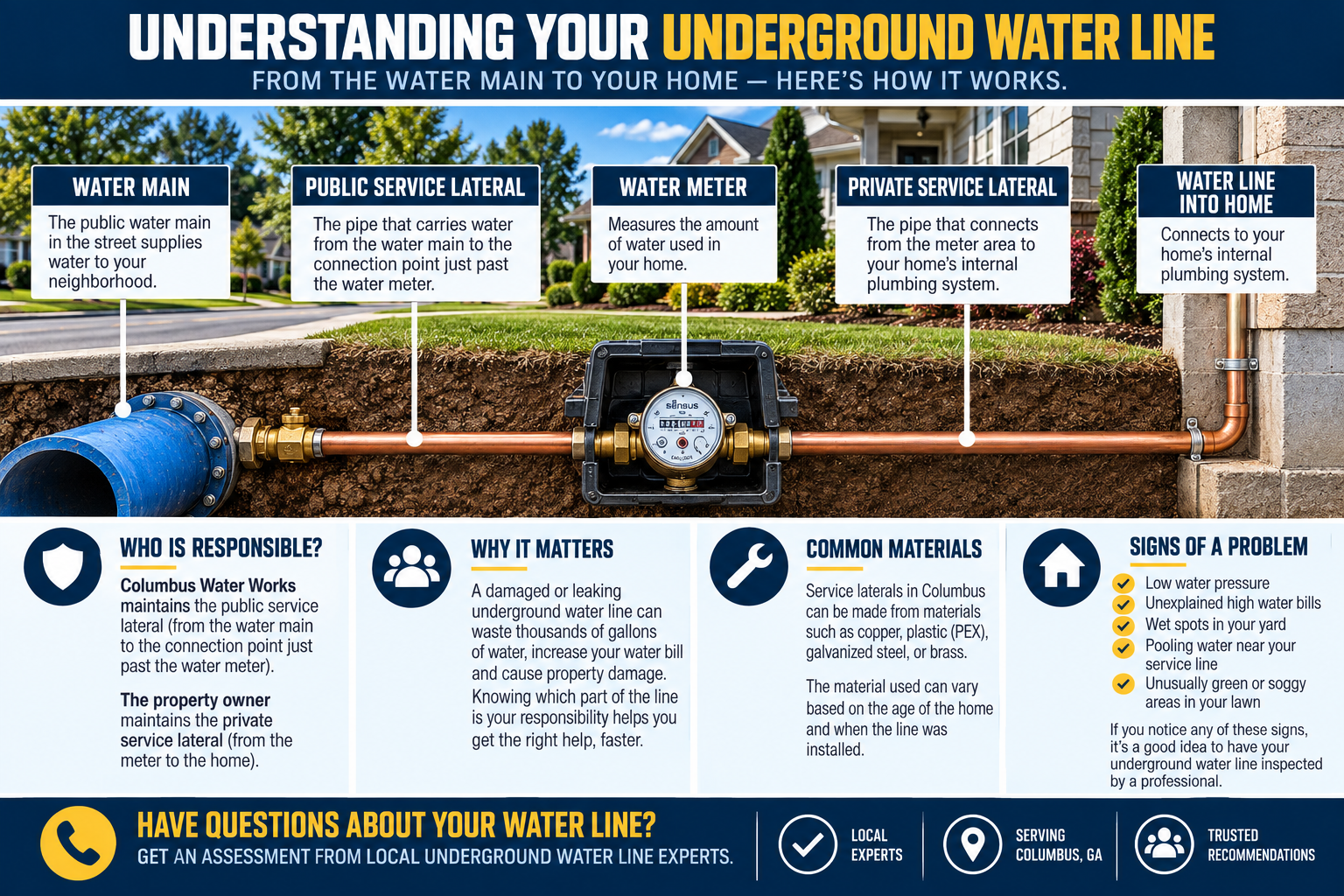
Water reaches a home through a buried line that starts at the utility main and ends at the house. According to Columbus Water Works (CWW), it maintains the public service lateral, the pipe from the main to the connection point just past the meter. The property owner maintains the private service lateral from there to the building's plumbing.
Because about half of Columbus homes were built before 1980 (Census Bureau ACS 2024), many properties have a water line that has been in the ground for decades or was replaced at some point. The material and age vary from home to home. See who's responsible for the water line from meter to house for the full breakdown. Homeowners around Columbus and in Weracoba–St. Elmo can start with a look at the buried line before deciding what kind of work fits.
Finding the Problem
A soggy or unusually green patch of lawn, low pressure, or a moving meter gets narrowed down with a meter test, a look at the site, and listening equipment before anything is dug.
Spot Repair
A small, targeted excavation at the break, used when the rest of the line is in decent shape and the damage is limited to one place.
Replacing the Whole Line
When the line is old, has failed before, or is a material likely to fail again nearby, replacing the run can make more sense than another patch.
Trenchless Options
A new line can sometimes be pulled through a narrow access point instead of a long open trench, which leaves more of the lawn and driveway alone.
Meter Check
With every fixture off, the meter should sit still. If it moves, water is going somewhere, and that is the first clue that the buried line may be leaking.
Locating and Permits
Georgia 811 marks public utilities but not the private line to your house, and the work itself may need a permit. Confirm requirements with Columbus Inspections & Code Enforcement.

What Shapes the Cost of a Repair
No two repairs look alike, so there is no flat number to quote. The factors that set the scope of an underground water line repair are the same from job to job.
- Length and Depth
- Access
- Pipe Material
- Repair Method
- Ground and Site
- Permits and Inspection
Underground Water Lines
Focused on the buried water line: repair, replacement, and trenchless work.
Clear Next Steps
You get a plain explanation of your options before any work is scheduled.
No-Pressure Contact
Use the contact form or call. There is no obligation to move forward.
Method Options
Spot repair, full replacement, or trenchless installation, depending on the property.
Related Underground Services
- Main Water Line RepairSpot repair of the service line when pressure or supply to the whole house drops.
- Underground Leak DetectionMeter checks, listening equipment, and line locating to pin down a leak before digging.
- Trenchless Water Line ReplacementPutting in a new line from small access points rather than one long trench.
- Directional BoringRunning a new line beneath a driveway, walkway, or patio without cutting it open.
- Broken Underground Pipe RepairFirst steps after a sudden break, surfacing water, or a sharp pressure loss.
- Main Water Line ReplacementReplacing the whole line, by open trench or trenchless, once repair stops making sense.

Helpful Resources
Learn more about underground water lines in Columbus and make informed decisions about your project.
- Signs of an Underground Water Line LeakThe yard, bill, pressure, and meter clues that point to a buried water line leak, and how to weigh them together.
- Water Leak in the Yard: Is It Your Water Line?How to tell a buried water line leak from irrigation, rain, or drainage, and what to do first once you suspect one.
- Repair vs. Replace Your Main Water LineThe factors that tip a buried water line toward a targeted repair or a full replacement: age, material, past repairs, length, and access.
- Who's Responsible for the Water Line From Meter to House?How Columbus Water Works divides the public and private service lateral, and what to do when a leak is on your side of the meter.
- How to Check Your Water Meter for a LeakTwo ways to test a Columbus water meter for a leak, how to find the meter box and what to do with the result.
- Water Line Work in Columbus, GA: 811, Permits & Right-of-WayWhat to do before water line work in Columbus, GA: Georgia 811, plumbing permits, right-of-way encroachment permits and contractor licensing.
- Found an Underground Water Leak? What to Do FirstA first-30-minutes checklist for a suspected buried water line leak: shutoff, meter check, photos, who to report it to, and when to call 811.
Underground Water Line Repair FAQ
Common questions about finding and fixing a buried water line in Columbus, GA.
Have an Underground Water Line Problem?
Reach out and we will help you understand your repair options. No obligation to move forward.
Which Part of the Line Is Yours
Water reaches a home through a buried line that starts at the utility main and ends at the house. According to Columbus Water Works (CWW), it maintains the public service lateral, the pipe from the main to the connection point just past the meter. The property owner maintains the private service lateral from there to the building's plumbing.
Because about half of Columbus homes were built before 1980 (Census Bureau ACS 2024), many properties have a water line that has been in the ground for decades or was replaced at some point. The material and age vary from home to home. See who's responsible for the water line from meter to house for the full breakdown. Homeowners around Columbus and in Weracoba–St. Elmo can start with a look at the buried line before deciding what kind of work fits.
Finding the Problem
A soggy or unusually green patch of lawn, low pressure, or a moving meter gets narrowed down with a meter test, a look at the site, and listening equipment before anything is dug.
Spot Repair
A small, targeted excavation at the break, used when the rest of the line is in decent shape and the damage is limited to one place.
Replacing the Whole Line
When the line is old, has failed before, or is a material likely to fail again nearby, replacing the run can make more sense than another patch.
Trenchless Options
A new line can sometimes be pulled through a narrow access point instead of a long open trench, which leaves more of the lawn and driveway alone.
Meter Check
With every fixture off, the meter should sit still. If it moves, water is going somewhere, and that is the first clue that the buried line may be leaking.
Locating and Permits
Georgia 811 marks public utilities but not the private line to your house, and the work itself may need a permit. Confirm requirements with Columbus Inspections & Code Enforcement.
What Shapes the Cost of a Repair
No two repairs look alike, so there is no flat number to quote. The factors that set the scope of an underground water line repair are the same from job to job.
- Length and Depth
- Access
- Pipe Material
- Repair Method
- Ground and Site
- Permits and Inspection
Underground Water Lines
Focused on the buried water line: repair, replacement, and trenchless work.
Clear Next Steps
You get a plain explanation of your options before any work is scheduled.
No-Pressure Contact
Use the contact form or call. There is no obligation to move forward.
Method Options
Spot repair, full replacement, or trenchless installation, depending on the property.
Related Underground Services
- Main Water Line RepairSpot repair of the service line when pressure or supply to the whole house drops.
- Underground Leak DetectionMeter checks, listening equipment, and line locating to pin down a leak before digging.
- Trenchless Water Line ReplacementPutting in a new line from small access points rather than one long trench.
- Directional BoringRunning a new line beneath a driveway, walkway, or patio without cutting it open.
- Broken Underground Pipe RepairFirst steps after a sudden break, surfacing water, or a sharp pressure loss.
- Main Water Line ReplacementReplacing the whole line, by open trench or trenchless, once repair stops making sense.
Helpful Resources
Learn more about underground water lines in Columbus and make informed decisions about your project.
- Signs of an Underground Water Line LeakThe yard, bill, pressure, and meter clues that point to a buried water line leak, and how to weigh them together.
- Water Leak in the Yard: Is It Your Water Line?How to tell a buried water line leak from irrigation, rain, or drainage, and what to do first once you suspect one.
- Repair vs. Replace Your Main Water LineThe factors that tip a buried water line toward a targeted repair or a full replacement: age, material, past repairs, length, and access.
- Who's Responsible for the Water Line From Meter to House?How Columbus Water Works divides the public and private service lateral, and what to do when a leak is on your side of the meter.
- How to Check Your Water Meter for a LeakTwo ways to test a Columbus water meter for a leak, how to find the meter box and what to do with the result.
- Water Line Work in Columbus, GA: 811, Permits & Right-of-WayWhat to do before water line work in Columbus, GA: Georgia 811, plumbing permits, right-of-way encroachment permits and contractor licensing.
- Found an Underground Water Leak? What to Do FirstA first-30-minutes checklist for a suspected buried water line leak: shutoff, meter check, photos, who to report it to, and when to call 811.
Underground Water Line Repair FAQ
Common questions about finding and fixing a buried water line in Columbus, GA.
How do I know if my underground water line is leaking?
Common signs are a wet or very green patch of yard that rain and sprinklers do not explain, a bill that climbs with no change in use, low pressure throughout the house, and a meter that keeps moving with everything shut off.
How is this different from a plumbing repair inside the house?
Inside repairs, like a faucet or a toilet, need no digging. Underground work deals with the buried line itself, which means locating the break first and then either excavating to reach it or using trenchless equipment.
Does underground water line repair always mean a big excavation?
No. A single, well-located break is often fixed with a small excavation right at that spot. Longer digging is more likely when the line is old or the damage covers a long section.
Who is responsible for the underground water line at my property?
According to Columbus Water Works, the utility maintains the public service lateral up to the connection point just past the meter, and the property owner maintains the private line from there to the building.
Can I dig to find the line myself?
Georgia law calls for a locate request through Georgia 811 before digging. The 811 marking covers public utilities, and the line from the meter to your house is generally treated as private, so a private locating service or plumber is needed for it.
Can I keep using water during an underground repair?
It depends on where the break is. A repair near the meter may mean the water is off to the whole property for part of the day, while other repairs leave some supply on.
Have an Underground Water Line Problem?
Reach out and we will help you understand your repair options. No obligation to move forward.
Call (770) 676-1685