
Trenchless vs. Open Trench Water Line Replacement
How trenchless and open-trench water line replacement compare on yard impact, driveways, timing, and when each one fits.
Two Ways to Replace a Buried Water Line
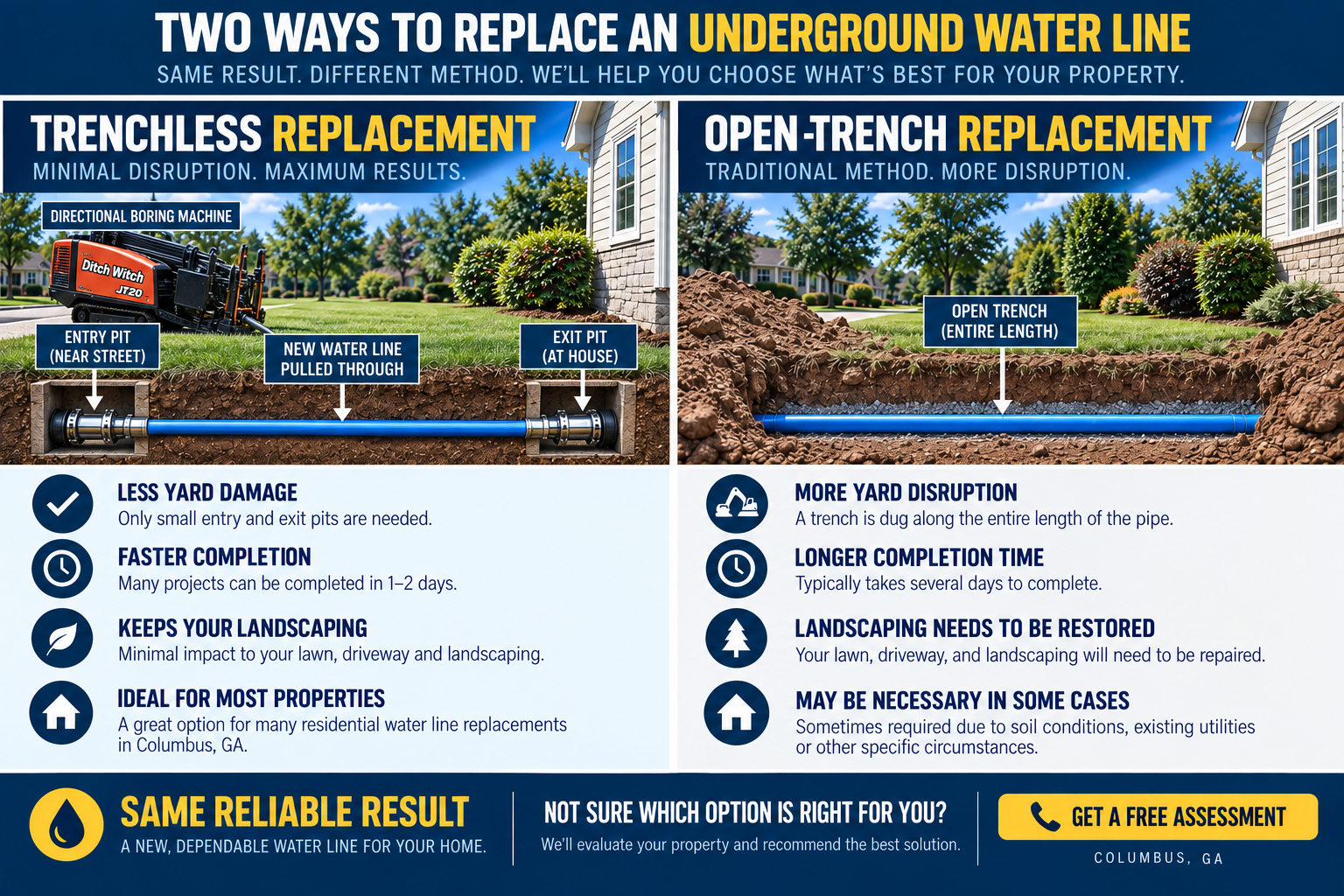
When a water line needs full replacement, there are two general methods. Open-trench work digs a continuous trench along the line. Trenchless work sets up at two access points and installs the new line between them without opening the ground in the middle.
Neither is better for every home. The right choice depends on the line, the yard, and what else is buried nearby. This guide is about water lines only.
Yard and Landscaping Impact
An open trench disturbs the ground along the full length of the line, which can mean removing grass, shrubs, or garden beds and restoring them afterward. Trenchless work is designed to limit that disturbance to the two access points, so the yard between them stays largely in place.
Driveways and Hard Surfaces
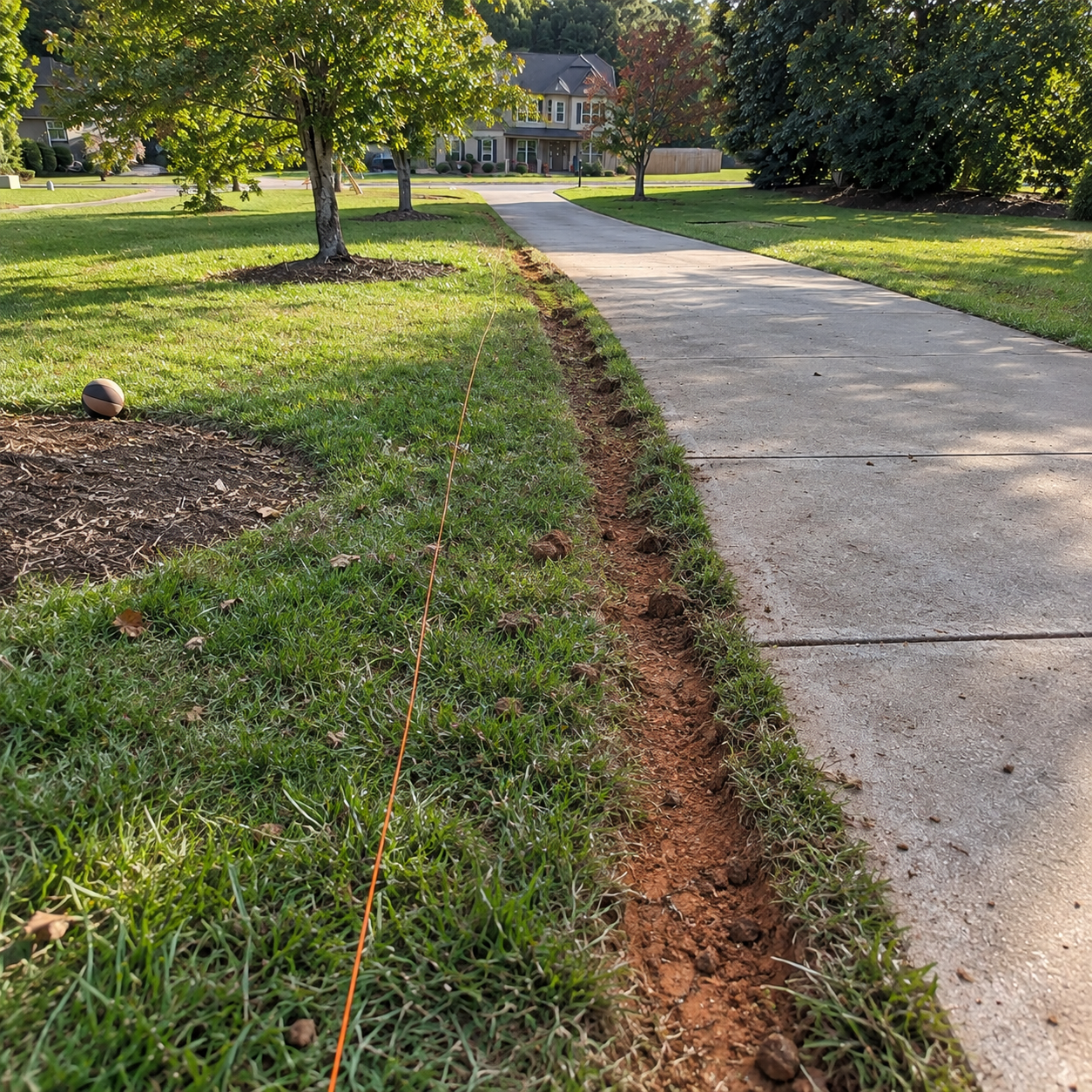
If the line runs under a driveway or walkway, open-trench work usually means cutting the surface and patching it afterward. A trenchless approach can often pass beneath it, which is one reason homeowners with paved crossings ask about it.
Timing and Scope
The graphic below notes that many trenchless projects can be completed in one to two days, while open-trench work runs longer and needs restoration afterward. Scope varies by property, so treat that as a general comparison, not a promise for any one job. Length, depth, soil, and surface repair all affect the schedule.
When Open Trench Is Still Needed
Some situations still call for a trench. Whether trenchless fits usually gets decided after the line is located and its condition and path are assessed.
- A collapsed or badly deformed existing line
- Soil conditions that make boring difficult
- Other buried utilities or obstructions along the path
- A layout where an entry or exit pit cannot be placed
Ground Conditions Around Columbus
Columbus sits on the Fall Line, where the Piedmont meets the Coastal Plain, according to the New Georgia Encyclopedia, so soils range from clay to sandy across the area. That is general background, not a rule for any one lot. Ground conditions still need to be looked at property by property. Mature trees and established yards are part of the picture for some properties in Weracoba–St. Elmo and Wynnton, which is why the choice depends on the property.
811 Comes Before Any Machine Digs
Georgia law requires a locate request before digging, and the graphic notes that a locate request is required before mechanized excavation or directional boring. Call 811 or use georgia811.com, and allow at least three business days. Marking public lines is free, but the private line from the meter to the house is generally not covered, so it may need a private locate. Permit questions are covered in Columbus water line permits.
If you are still deciding whether replacement is the right call, see repair vs. replace your main water line. For what each service involves, see trenchless water line replacement and main water line replacement.
Related Underground Services
- Trenchless Water Line ReplacementPutting in a new line from small access points rather than one long trench.
- Directional BoringRunning a new line beneath a driveway, walkway, or patio without cutting it open.
- Main Water Line ReplacementReplacing the whole line, by open trench or trenchless, once repair stops making sense.
Related Underground Services
- Trenchless Water Line ReplacementPutting in a new line from small access points rather than one long trench.
- Directional BoringRunning a new line beneath a driveway, walkway, or patio without cutting it open.
- Main Water Line ReplacementReplacing the whole line, by open trench or trenchless, once repair stops making sense.
Helpful Resources
Learn more about underground water lines in Columbus and make informed decisions about your project.
- Repair vs. Replace Your Main Water LineThe factors that tip a buried water line toward a targeted repair or a full replacement: age, material, past repairs, length, and access.
- Water Line Work in Columbus, GA: 811, Permits & Right-of-WayWhat to do before water line work in Columbus, GA: Georgia 811, plumbing permits, right-of-way encroachment permits and contractor licensing.
- Signs of an Underground Water Line LeakThe yard, bill, pressure, and meter clues that point to a buried water line leak, and how to weigh them together.
Trenchless vs. Open Trench: FAQ
Common questions comparing the two replacement methods.
Trenchless vs. Open Trench: FAQ
Common questions comparing the two replacement methods.
Is trenchless always better than open trench?
No. It usually disturbs less of the yard, but a collapsed line, difficult soil, or buried obstructions can still call for an open trench.
Does trenchless mean no digging at all?
No. It still needs an entry pit near the street and an exit pit at the house. The ground between them is not opened along the way.
How long does trenchless replacement take?
The graphic notes many projects can be completed in one to two days. Scope varies by property, so a look at your specific line is needed for a real estimate.
Do I still need 811 for trenchless work?
Yes. Georgia law requires a locate request before digging, and that includes mechanized excavation and directional boring.
Does soil in Columbus affect the method?
Columbus sits on the Fall Line, so soils range from clay to sandy. Conditions differ across properties, so the method is confirmed after the site is assessed.
Is directional boring the same thing?
Not exactly. Directional boring installs a new line along a new path, while trenchless replacement swaps out an existing line. See the directional boring service page for the difference.
Weighing Trenchless vs. Open Trench?
Reach out and tell us about your property. We will help you understand which approach may fit, with no obligation to move forward.
Weighing Trenchless vs. Open Trench?
Reach out and tell us about your property. We will help you understand which approach may fit, with no obligation to move forward.
Call (770) 676-1685