

Repair vs. Replace Your Main Water Line
The factors that tip a buried water line toward a targeted repair or a full replacement: age, material, past repairs, length, and access.
Fix the Spot or Replace the Line?
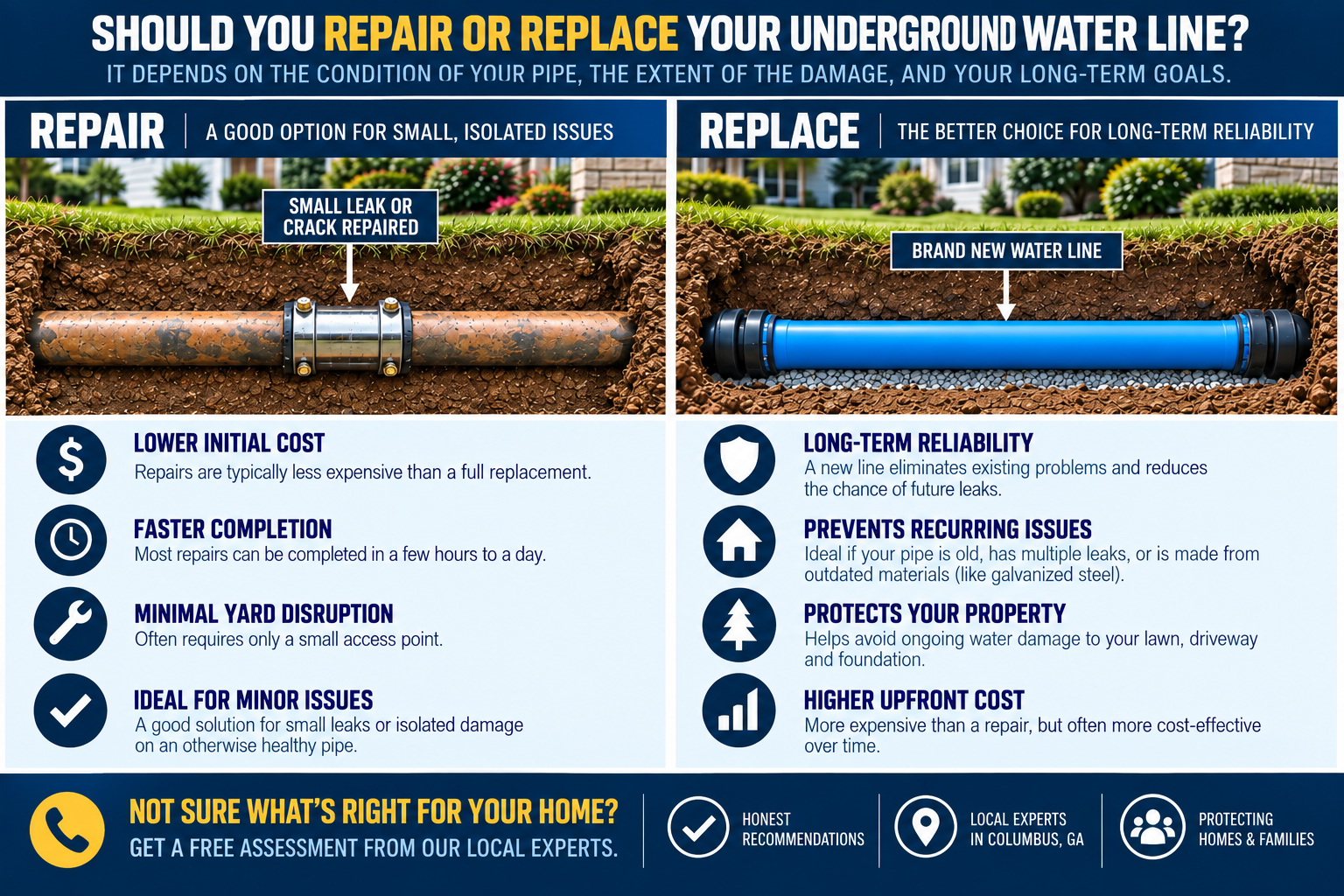
Once a leak on your main water line is confirmed and located, the next question is whether to fix that one spot or replace the line. Both are reasonable. A single, isolated problem on an otherwise sound line often suits a repair, while an older line with several trouble spots may be better served by replacement.
Because about half of Columbus homes were built before 1980, according to the Census Bureau ACS 2024, many properties have a water service line that has been in the ground for decades, or has been replaced at some point. The material and age vary from home to home, which is why a look at your specific line matters.
The Factors That Matter Most
No single factor decides it. These are the ones that most often point one way or the other.
- Age and material: a newer line in sound material favors repair, while an older material that can corrode favors replacement
- Past repairs: a first problem favors repair, and repeat leaks in different spots favor replacement
- Run length: a short run is simpler to replace, and a long run makes the decision weigh heavier on the extent of damage
- Pressure symptoms: weak pressure at every tap can point to a line-wide issue, not one break
- Access and surface restoration: driveways, walkways, and landscaping affect how much work either option involves
Pipe Material and Age
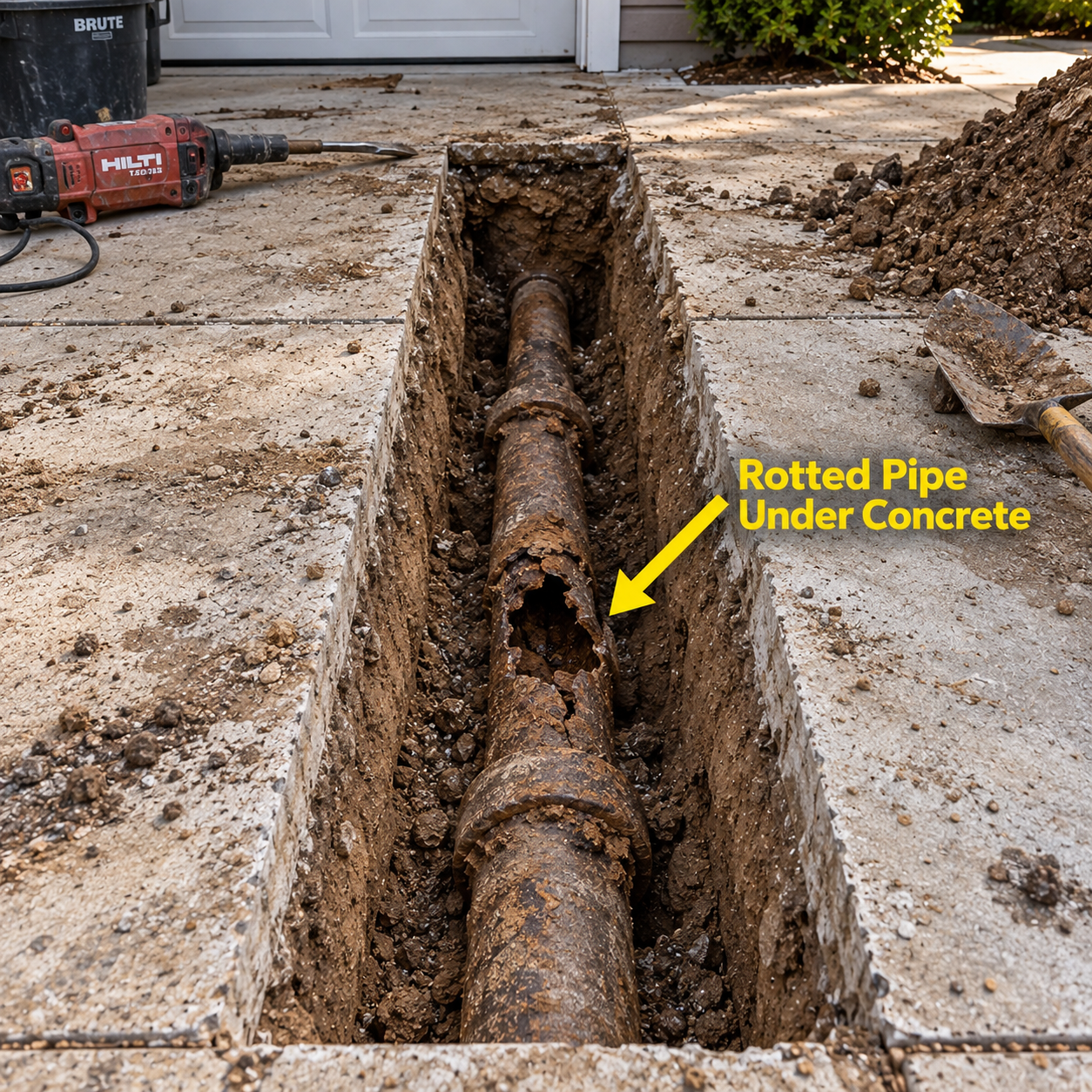
Material shapes how a line ages. Galvanized steel is an older material that can corrode over time, and when one section has worn through, others may not be far behind. Copper and modern plastic such as PEX are often used for service lines and can last a long time, though any material can eventually need work.
Columbus Water Works publishes a homeowner guide for identifying pipe materials, including copper, plastic, brass, galvanized, and PEX, and notes that a magnet clings to galvanized pipe. It also offers a searchable material map on its website. Both are a starting point for finding out what you have.
Repeat Repairs and Line Length
A line that has already needed more than one repair is telling you about its overall condition, not just the spots that failed. At some point, patching one break after another can cost more in total than addressing the line as a whole.
Length matters too. Replacing a short stretch from the meter to the house is a smaller job than a long run, and the longer the run, the more it helps to understand how many spots are actually affected.
Access, Surfaces, and Cost Factors
Cost depends on the length of the line, its depth, the soil, any driveway or road crossings, the material, the method, and how much surface has to be restored. Repair usually opens a smaller area. Replacement costs more up front but can mean fewer future surprises.
If replacement is on the table, trenchless vs. open-trench replacement explains how the method affects your yard, and Columbus water line permits covers 811 and permit questions.
How the Decision Usually Gets Made
It follows from what is found once the line is located and inspected, not from the age of the house alone. Underground water line repair covers how diagnosis works, and main water line replacement covers what replacement involves. For homes in Hilton Heights and Clubview Heights, the same factors apply, since the line itself decides the outcome.
Related Underground Services
- Underground Water Line RepairWhat a failing buried line looks like, how it's diagnosed, and the repair options.
- Main Water Line RepairSpot repair of the service line when pressure or supply to the whole house drops.
- Main Water Line ReplacementReplacing the whole line, by open trench or trenchless, once repair stops making sense.


Related Underground Services
- Underground Water Line RepairWhat a failing buried line looks like, how it's diagnosed, and the repair options.
- Main Water Line RepairSpot repair of the service line when pressure or supply to the whole house drops.
- Main Water Line ReplacementReplacing the whole line, by open trench or trenchless, once repair stops making sense.
Helpful Resources
Learn more about underground water lines in Columbus and make informed decisions about your project.
- Signs of an Underground Water Line LeakThe yard, bill, pressure, and meter clues that point to a buried water line leak, and how to weigh them together.
- Trenchless vs. Open Trench Water Line ReplacementHow trenchless and open-trench water line replacement compare on yard impact, driveways, timing, and when each one fits.
- Water Line Work in Columbus, GA: 811, Permits & Right-of-WayWhat to do before water line work in Columbus, GA: Georgia 811, plumbing permits, right-of-way encroachment permits and contractor licensing.
Repair vs. Replace: FAQ
Common questions about choosing between repair and replacement.
Repair vs. Replace: FAQ
Common questions about choosing between repair and replacement.
Is repair always cheaper than replacement?
A single spot repair usually costs less up front. If the line is old or has already failed more than once, though, one repair may be the first of several.
Does one leak mean I need a new line?
Not necessarily. One isolated break on an otherwise sound line is often a candidate for a targeted repair.
Which materials tend to need replacement sooner?
Older galvanized steel can corrode over time. Copper and modern plastic such as PEX generally last longer, but any material can eventually need replacement.
How do I find out what my water line is made of?
Columbus Water Works publishes a homeowner guide for identifying pipe materials, and notes that a magnet clings to galvanized pipe. A plumber can also identify it during an inspection.
Can trenchless methods be used for repair?
Trenchless work is generally a replacement approach. It installs a new line through small access points rather than fixing one spot.
How long does repair or replacement take?
It depends on the length, depth, access, and whether it is a spot repair or full replacement. A look at the specific property is the only reliable way to estimate timing.
Weighing Repair vs. Replacement?
Reach out and tell us about your line. We will help you understand which direction fits, with no obligation to move forward.
Weighing Repair vs. Replacement?
Reach out and tell us about your line. We will help you understand which direction fits, with no obligation to move forward.
Call (770) 676-1685