
Trenchless Water Line Replacement in Columbus, GA
Replacing a water line does not always mean a trench across the yard. Trenchless methods install new pipe through small access points. Here is how the process works and when a property is a good candidate.
What Trenchless Replacement Means
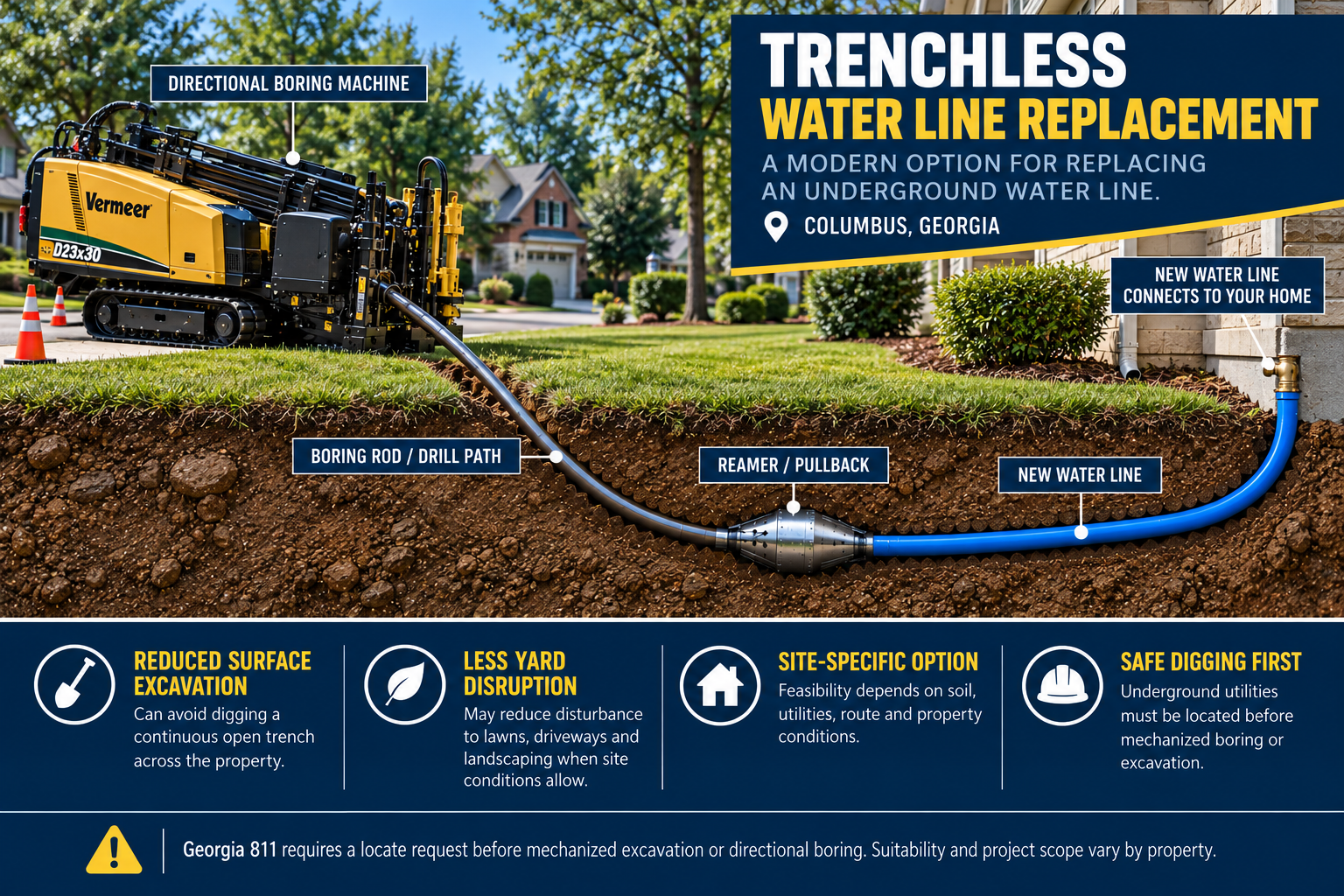
Trenchless water line replacement installs new pipe without a continuous open trench. Work happens from small access points, typically an entry pit near the street and an exit pit at the house, and equipment pulls the new line through the ground.
Columbus sits on the Fall Line, where the Piedmont meets the Coastal Plain, so ground conditions range from clay to sandy, which is one reason a site check matters before choosing a method. For a wider look at when replacement beats repair, see main water line replacement. Mature trees and established landscaping can make trenchless work worth a look, which depends on the property, whether it is in Wynnton or Weracoba–St. Elmo.
Is Your Site a Fit
Line length, depth, soil, obstacles, and access at both ends all decide whether trenchless is practical.
Less Surface Disturbance
Most of the yard, walkway, and driveway stay in place, since the digging happens at two small points.
Trenchless vs. Open-Trench
Open-trench exposes the whole run, while trenchless works through two pits. Each has situations where it is the better tool.
Trenchless vs. Directional Boring
Both use drilling equipment. Trenchless replaces an existing line, while [directional boring](/services/directional-boring/) installs a new line on a new path.
What Can Rule It Out
Very rocky ground, heavy tree roots, crowded utilities, or a route that is too short or too tight can make open-trench the better choice.
Cost Factors
Length, depth, access, soil, and equipment setup all shape the scope of a trenchless job.
What Affects the Trenchless Cost
Trenchless work has its own set of variables. These are the ones that move the scope.
- Line Length
- Depth
- Access
- Soil and Site Conditions
- Equipment Setup
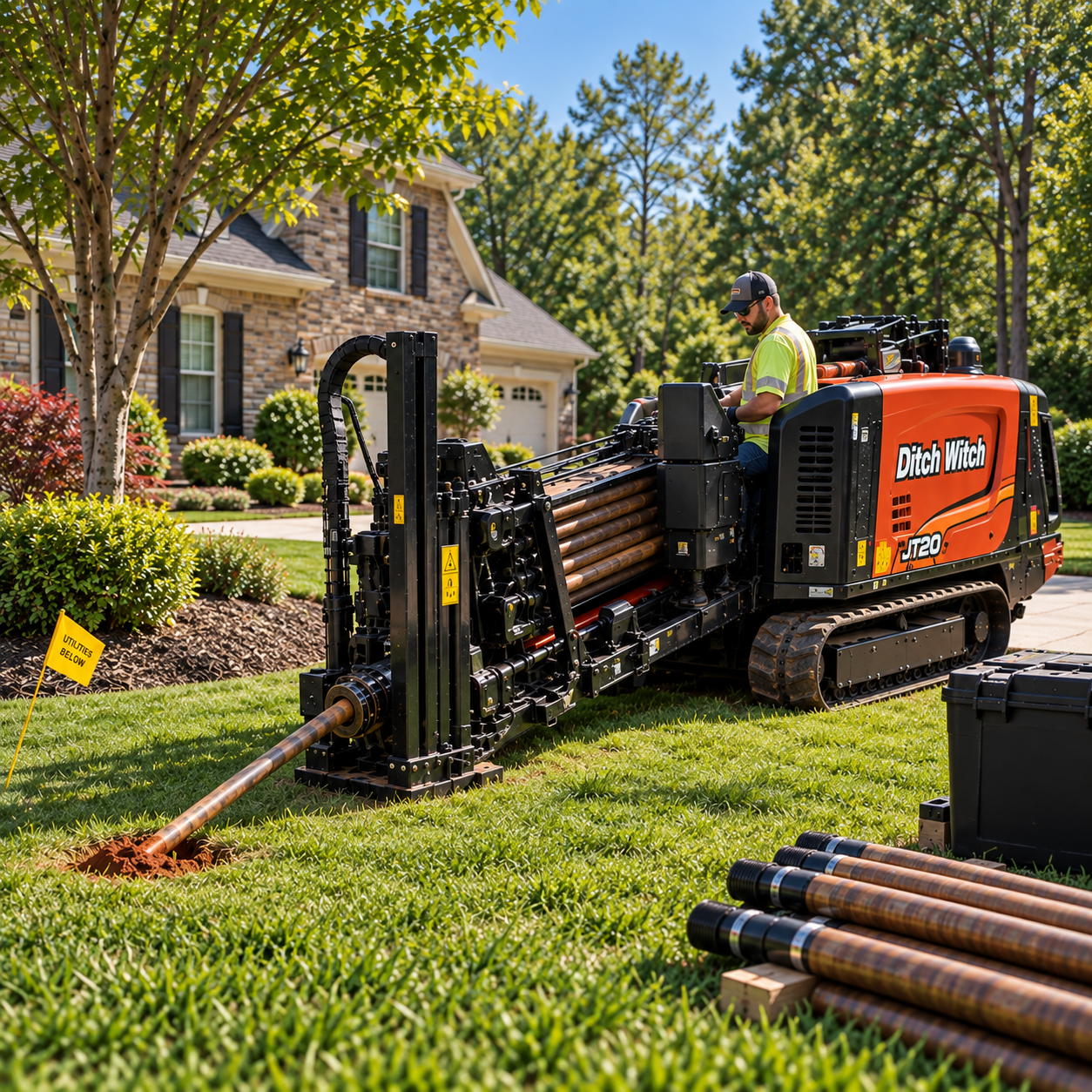
Trenchless Water Lines
Attention on replacing buried water lines with less digging.
Honest Candidacy Check
If a property is not a fit, an open-trench route is explained instead.
No-Obligation Contact
Reach out through the form or by phone. There is no pressure to move ahead.
Safe Digging First
Georgia 811 requires a locate request before mechanized excavation or directional boring.
Related Underground Services
- Main Water Line ReplacementReplacing the whole line, by open trench or trenchless, once repair stops making sense.
- Directional BoringRunning a new line beneath a driveway, walkway, or patio without cutting it open.
- Underground Leak DetectionMeter checks, listening equipment, and line locating to pin down a leak before digging.
- Underground Water Line RepairWhat a failing buried line looks like, how it's diagnosed, and the repair options.

Helpful Resources
Learn more about underground water lines in Columbus and make informed decisions about your project.
- Trenchless vs. Open Trench Water Line ReplacementHow trenchless and open-trench water line replacement compare on yard impact, driveways, timing, and when each one fits.
- Repair vs. Replace Your Main Water LineThe factors that tip a buried water line toward a targeted repair or a full replacement: age, material, past repairs, length, and access.
- How to Check Your Water Meter for a LeakTwo ways to test a Columbus water meter for a leak, how to find the meter box and what to do with the result.
- Water Line Work in Columbus, GA: 811, Permits & Right-of-WayWhat to do before water line work in Columbus, GA: Georgia 811, plumbing permits, right-of-way encroachment permits and contractor licensing.
- Signs of an Underground Water Line LeakThe yard, bill, pressure, and meter clues that point to a buried water line leak, and how to weigh them together.
- Water Leak in the Yard: Is It Your Water Line?How to tell a buried water line leak from irrigation, rain, or drainage, and what to do first once you suspect one.
- Who's Responsible for the Water Line From Meter to House?How Columbus Water Works divides the public and private service lateral, and what to do when a leak is on your side of the meter.
Trenchless Water Line Replacement FAQ
Common questions about trenchless water line replacement in Columbus, GA.
Want to Avoid Digging Up the Yard?
Reach out and we will help you determine whether your property is a trenchless candidate. No obligation to move forward.
What Trenchless Replacement Means
Trenchless water line replacement installs new pipe without a continuous open trench. Work happens from small access points, typically an entry pit near the street and an exit pit at the house, and equipment pulls the new line through the ground.
Columbus sits on the Fall Line, where the Piedmont meets the Coastal Plain, so ground conditions range from clay to sandy, which is one reason a site check matters before choosing a method. For a wider look at when replacement beats repair, see main water line replacement. Mature trees and established landscaping can make trenchless work worth a look, which depends on the property, whether it is in Wynnton or Weracoba–St. Elmo.
Is Your Site a Fit
Line length, depth, soil, obstacles, and access at both ends all decide whether trenchless is practical.
Less Surface Disturbance
Most of the yard, walkway, and driveway stay in place, since the digging happens at two small points.
Trenchless vs. Open-Trench
Open-trench exposes the whole run, while trenchless works through two pits. Each has situations where it is the better tool.
Trenchless vs. Directional Boring
Both use drilling equipment. Trenchless replaces an existing line, while [directional boring](/services/directional-boring/) installs a new line on a new path.
What Can Rule It Out
Very rocky ground, heavy tree roots, crowded utilities, or a route that is too short or too tight can make open-trench the better choice.
Cost Factors
Length, depth, access, soil, and equipment setup all shape the scope of a trenchless job.
What Affects the Trenchless Cost
Trenchless work has its own set of variables. These are the ones that move the scope.
- Line Length
- Depth
- Access
- Soil and Site Conditions
- Equipment Setup
Trenchless Water Lines
Attention on replacing buried water lines with less digging.
Honest Candidacy Check
If a property is not a fit, an open-trench route is explained instead.
No-Obligation Contact
Reach out through the form or by phone. There is no pressure to move ahead.
Safe Digging First
Georgia 811 requires a locate request before mechanized excavation or directional boring.
Related Underground Services
- Main Water Line ReplacementReplacing the whole line, by open trench or trenchless, once repair stops making sense.
- Directional BoringRunning a new line beneath a driveway, walkway, or patio without cutting it open.
- Underground Leak DetectionMeter checks, listening equipment, and line locating to pin down a leak before digging.
- Underground Water Line RepairWhat a failing buried line looks like, how it's diagnosed, and the repair options.
Helpful Resources
Learn more about underground water lines in Columbus and make informed decisions about your project.
- Trenchless vs. Open Trench Water Line ReplacementHow trenchless and open-trench water line replacement compare on yard impact, driveways, timing, and when each one fits.
- Repair vs. Replace Your Main Water LineThe factors that tip a buried water line toward a targeted repair or a full replacement: age, material, past repairs, length, and access.
- How to Check Your Water Meter for a LeakTwo ways to test a Columbus water meter for a leak, how to find the meter box and what to do with the result.
- Water Line Work in Columbus, GA: 811, Permits & Right-of-WayWhat to do before water line work in Columbus, GA: Georgia 811, plumbing permits, right-of-way encroachment permits and contractor licensing.
- Signs of an Underground Water Line LeakThe yard, bill, pressure, and meter clues that point to a buried water line leak, and how to weigh them together.
- Water Leak in the Yard: Is It Your Water Line?How to tell a buried water line leak from irrigation, rain, or drainage, and what to do first once you suspect one.
- Who's Responsible for the Water Line From Meter to House?How Columbus Water Works divides the public and private service lateral, and what to do when a leak is on your side of the meter.
Trenchless Water Line Replacement FAQ
Common questions about trenchless water line replacement in Columbus, GA.
Is trenchless always less disruptive than open-trench?
Usually, since it avoids trenching the whole run. Two pits still get dug and need restoring, and some sites are better suited to open-trench.
What would rule out trenchless replacement?
Heavy rock, dense roots, a route that is very short or has tight bends, or crowded buried utilities can all make it impractical. A site check settles it.
Does trenchless cost more than open-trench?
Not necessarily. Equipment and setup add cost, while less excavation and restoration can offset it. It depends on the property.
Is trenchless the same as directional boring?
They use similar equipment. Trenchless replacement swaps out an existing water line, while directional boring installs a new line along a new path.
How long does a trenchless replacement take?
The comparison graphic notes many trenchless projects can be completed in one to two days, though scope varies by property.
Can trenchless work near mature tree roots?
Sometimes. The bore can be planned at a depth and path that avoids major roots, but heavy root systems can limit it. That is checked before a method is chosen.
Want to Avoid Digging Up the Yard?
Reach out and we will help you determine whether your property is a trenchless candidate. No obligation to move forward.
Call (770) 676-1685