
Main Water Line Replacement in Columbus, GA
Some water service lines have been repaired one time too many. Replacing the line from the meter to the house gives you new pipe and a fresh start. This page explains when replacement makes sense and how it is done.
When Full Replacement Makes Sense
A single, well-isolated break is often better handled with a spot repair. Replacement becomes the stronger option after repeated failures, when the pipe is an aging material such as galvanized steel, or when diagnosis shows wear along a long stretch instead of one spot. About 35 percent of Columbus homes were built before 1970 (Census Bureau ACS 2024), and an older house is more likely to have an older line, though it may already have been replaced once.
The homeowner side of the line is the section in question. Columbus Water Works (CWW) maintains the public service lateral, and the property owner maintains the private line from the connection point past the meter. See repair vs. replace: how to decide for the full comparison. Replacement questions come up for homeowners in Hilton Heights and Clubview Heights as well as Green Island Hills, where the right answer depends on the individual line.
Open-Trench Replacement
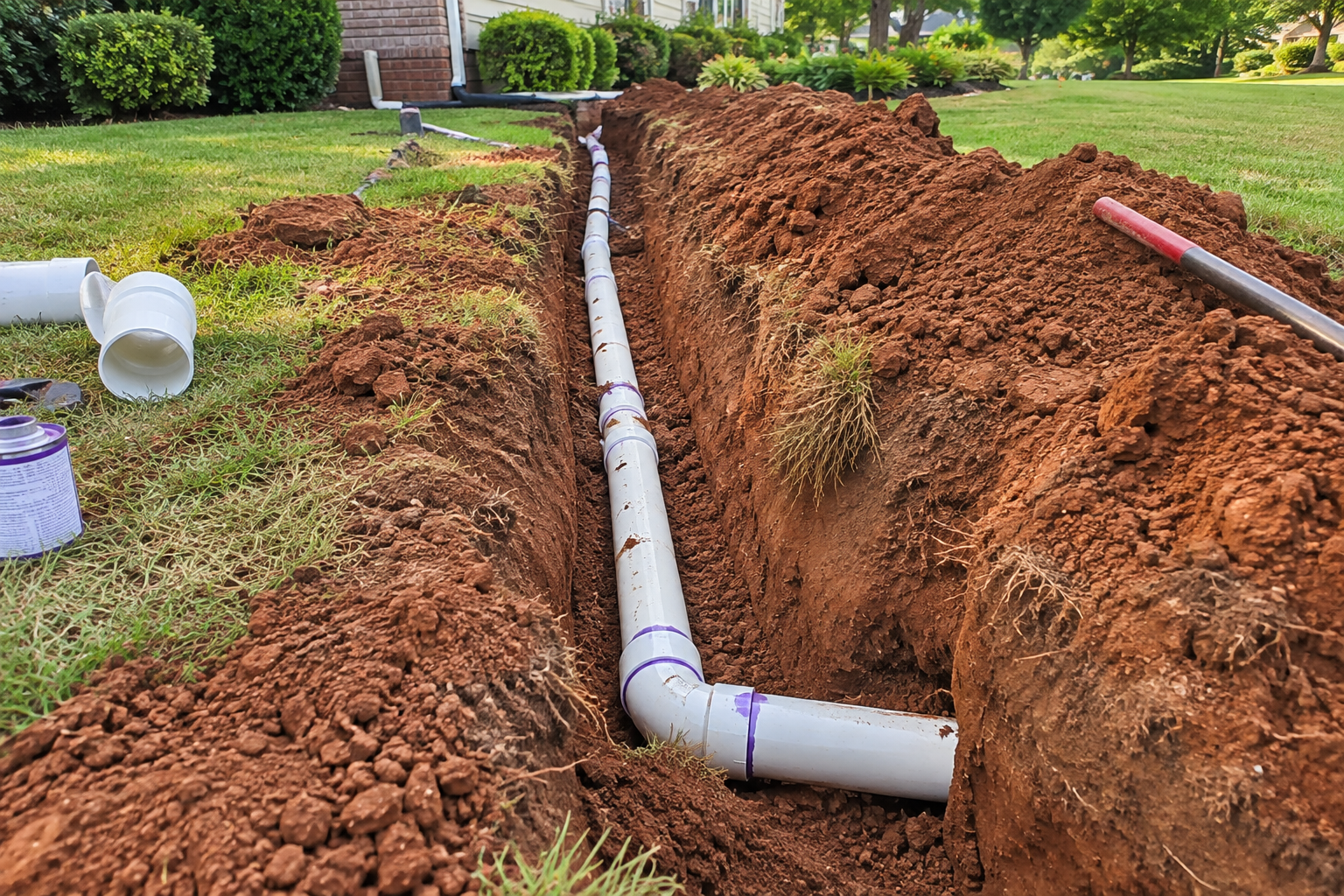
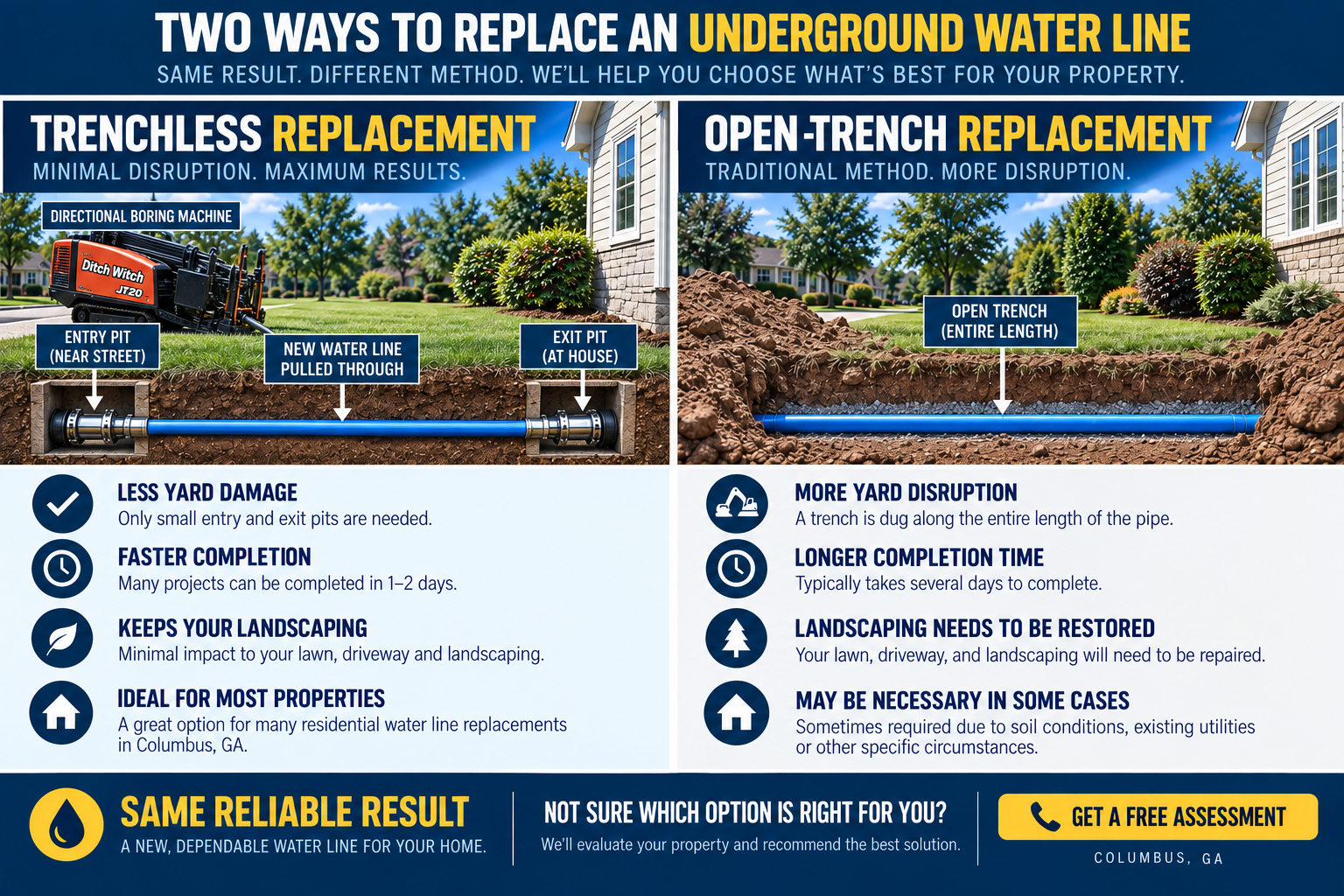
The old line is exposed along its route and new pipe goes in the same trench. It is straightforward and works in most conditions, but it disturbs the ground along the whole run.
Trenchless Replacement
New pipe is pulled in through small access points, leaving most of the yard and hardscape undisturbed when the site allows it.
Comparing Disruption
Lawn, walkways, driveways, and trees all factor into which method makes sense. The right choice depends on what sits over the line.
How a Replacement Goes
Locate the line and utilities, choose a method, install the new run, reconnect at both ends, test, and restore the surface.
What Drives the Scope
Length, depth, material, access, and surface restoration all change the size of the job.
Permits and Jurisdiction
Columbus is one consolidated government, so start with Columbus Inspections & Code Enforcement. Work in the public right-of-way involves Columbus Engineering.

What Affects the Replacement Cost
Replacement scope varies widely between properties. These are the main factors, without any flat pricing attached.
- Length and Depth
- Access and Surface
- Pipe Material
- Open-Trench or Trenchless
- Ground and Site Conditions
- Permitting
Line Replacement Focus
Work centered on the buried water line, from the meter to the house.
Method Explained
Open-trench and trenchless options are laid out so you can compare them for your property.
Contact Without Obligation
Reach out through the form or by phone. Moving forward is entirely up to you.
Clear Scope
Start with an understanding of what the job involves and what affects it.
Related Underground Services
- Main Water Line RepairSpot repair of the service line when pressure or supply to the whole house drops.
- Trenchless Water Line ReplacementPutting in a new line from small access points rather than one long trench.
- Directional BoringRunning a new line beneath a driveway, walkway, or patio without cutting it open.
- Underground Leak DetectionMeter checks, listening equipment, and line locating to pin down a leak before digging.




Helpful Resources
Learn more about underground water lines in Columbus and make informed decisions about your project.
- Repair vs. Replace Your Main Water LineThe factors that tip a buried water line toward a targeted repair or a full replacement: age, material, past repairs, length, and access.
- Trenchless vs. Open Trench Water Line ReplacementHow trenchless and open-trench water line replacement compare on yard impact, driveways, timing, and when each one fits.
- Water Line Work in Columbus, GA: 811, Permits & Right-of-WayWhat to do before water line work in Columbus, GA: Georgia 811, plumbing permits, right-of-way encroachment permits and contractor licensing.
- How to Check Your Water Meter for a LeakTwo ways to test a Columbus water meter for a leak, how to find the meter box and what to do with the result.
- Signs of an Underground Water Line LeakThe yard, bill, pressure, and meter clues that point to a buried water line leak, and how to weigh them together.
- Water Leak in the Yard: Is It Your Water Line?How to tell a buried water line leak from irrigation, rain, or drainage, and what to do first once you suspect one.
- Who's Responsible for the Water Line From Meter to House?How Columbus Water Works divides the public and private service lateral, and what to do when a leak is on your side of the meter.
Main Water Line Replacement FAQ
Common questions about replacing a water service line in Columbus, GA.
Considering a Full Line Replacement?
Reach out and we will help you weigh open-trench against trenchless for your property. No obligation to move forward.
When Full Replacement Makes Sense
A single, well-isolated break is often better handled with a spot repair. Replacement becomes the stronger option after repeated failures, when the pipe is an aging material such as galvanized steel, or when diagnosis shows wear along a long stretch instead of one spot. About 35 percent of Columbus homes were built before 1970 (Census Bureau ACS 2024), and an older house is more likely to have an older line, though it may already have been replaced once.
The homeowner side of the line is the section in question. Columbus Water Works (CWW) maintains the public service lateral, and the property owner maintains the private line from the connection point past the meter. See repair vs. replace: how to decide for the full comparison. Replacement questions come up for homeowners in Hilton Heights and Clubview Heights as well as Green Island Hills, where the right answer depends on the individual line.
Open-Trench Replacement
The old line is exposed along its route and new pipe goes in the same trench. It is straightforward and works in most conditions, but it disturbs the ground along the whole run.
Trenchless Replacement
New pipe is pulled in through small access points, leaving most of the yard and hardscape undisturbed when the site allows it.
Comparing Disruption
Lawn, walkways, driveways, and trees all factor into which method makes sense. The right choice depends on what sits over the line.
How a Replacement Goes
Locate the line and utilities, choose a method, install the new run, reconnect at both ends, test, and restore the surface.
What Drives the Scope
Length, depth, material, access, and surface restoration all change the size of the job.
Permits and Jurisdiction
Columbus is one consolidated government, so start with Columbus Inspections & Code Enforcement. Work in the public right-of-way involves Columbus Engineering.
What Affects the Replacement Cost
Replacement scope varies widely between properties. These are the main factors, without any flat pricing attached.
- Length and Depth
- Access and Surface
- Pipe Material
- Open-Trench or Trenchless
- Ground and Site Conditions
- Permitting
Line Replacement Focus
Work centered on the buried water line, from the meter to the house.
Method Explained
Open-trench and trenchless options are laid out so you can compare them for your property.
Contact Without Obligation
Reach out through the form or by phone. Moving forward is entirely up to you.
Clear Scope
Start with an understanding of what the job involves and what affects it.
Related Underground Services
- Main Water Line RepairSpot repair of the service line when pressure or supply to the whole house drops.
- Trenchless Water Line ReplacementPutting in a new line from small access points rather than one long trench.
- Directional BoringRunning a new line beneath a driveway, walkway, or patio without cutting it open.
- Underground Leak DetectionMeter checks, listening equipment, and line locating to pin down a leak before digging.
Helpful Resources
Learn more about underground water lines in Columbus and make informed decisions about your project.
- Repair vs. Replace Your Main Water LineThe factors that tip a buried water line toward a targeted repair or a full replacement: age, material, past repairs, length, and access.
- Trenchless vs. Open Trench Water Line ReplacementHow trenchless and open-trench water line replacement compare on yard impact, driveways, timing, and when each one fits.
- Water Line Work in Columbus, GA: 811, Permits & Right-of-WayWhat to do before water line work in Columbus, GA: Georgia 811, plumbing permits, right-of-way encroachment permits and contractor licensing.
- How to Check Your Water Meter for a LeakTwo ways to test a Columbus water meter for a leak, how to find the meter box and what to do with the result.
- Signs of an Underground Water Line LeakThe yard, bill, pressure, and meter clues that point to a buried water line leak, and how to weigh them together.
- Water Leak in the Yard: Is It Your Water Line?How to tell a buried water line leak from irrigation, rain, or drainage, and what to do first once you suspect one.
- Who's Responsible for the Water Line From Meter to House?How Columbus Water Works divides the public and private service lateral, and what to do when a leak is on your side of the meter.
Main Water Line Replacement FAQ
Common questions about replacing a water service line in Columbus, GA.
How do I know if I need replacement instead of a repair?
Repeated failures, an older material like galvanized steel, or damage spread along the line all point toward replacement. One isolated break in otherwise sound pipe usually points to repair.
Does replacement always mean trenching the whole yard?
No. Open-trench replacement digs along the line, but trenchless methods use two smaller access points. Which one fits depends on the site, the soil, and what is above the line.
Will replacement disturb my driveway or landscaping?
It can. Open-trench work disturbs whatever sits over the line, while trenchless work is meant to reduce that. Any surface that is cut or dug up needs restoring.
How long does replacement take?
It depends on length, access, method, and any permits. The comparison graphic notes many trenchless projects finish in one to two days, but scope varies by property.
What affects the cost of replacement?
Length, depth, access, surface restoration, pipe material, method, site conditions, and permits. We do not publish flat prices because each property is different.
Is trenchless always more expensive than open-trench?
Not always. Trenchless equipment costs more to bring in, but it can reduce excavation and restoration. Which one costs less depends on the property.
Considering a Full Line Replacement?
Reach out and we will help you weigh open-trench against trenchless for your property. No obligation to move forward.
Call (770) 676-1685