
Underground Water Leak Detection in Columbus, GA
A buried leak rarely shows up right where the damage is. Detection finds the actual spot first, so digging is limited to where it is needed. Here is how underground water leaks are narrowed down.
Why Diagnosis Comes Before Digging
Water often travels along the pipe or through the soil before it reaches the surface, so the wet spot in the yard and the actual leak may be some distance apart. Detection combines a few methods to narrow the search before an excavation begins.
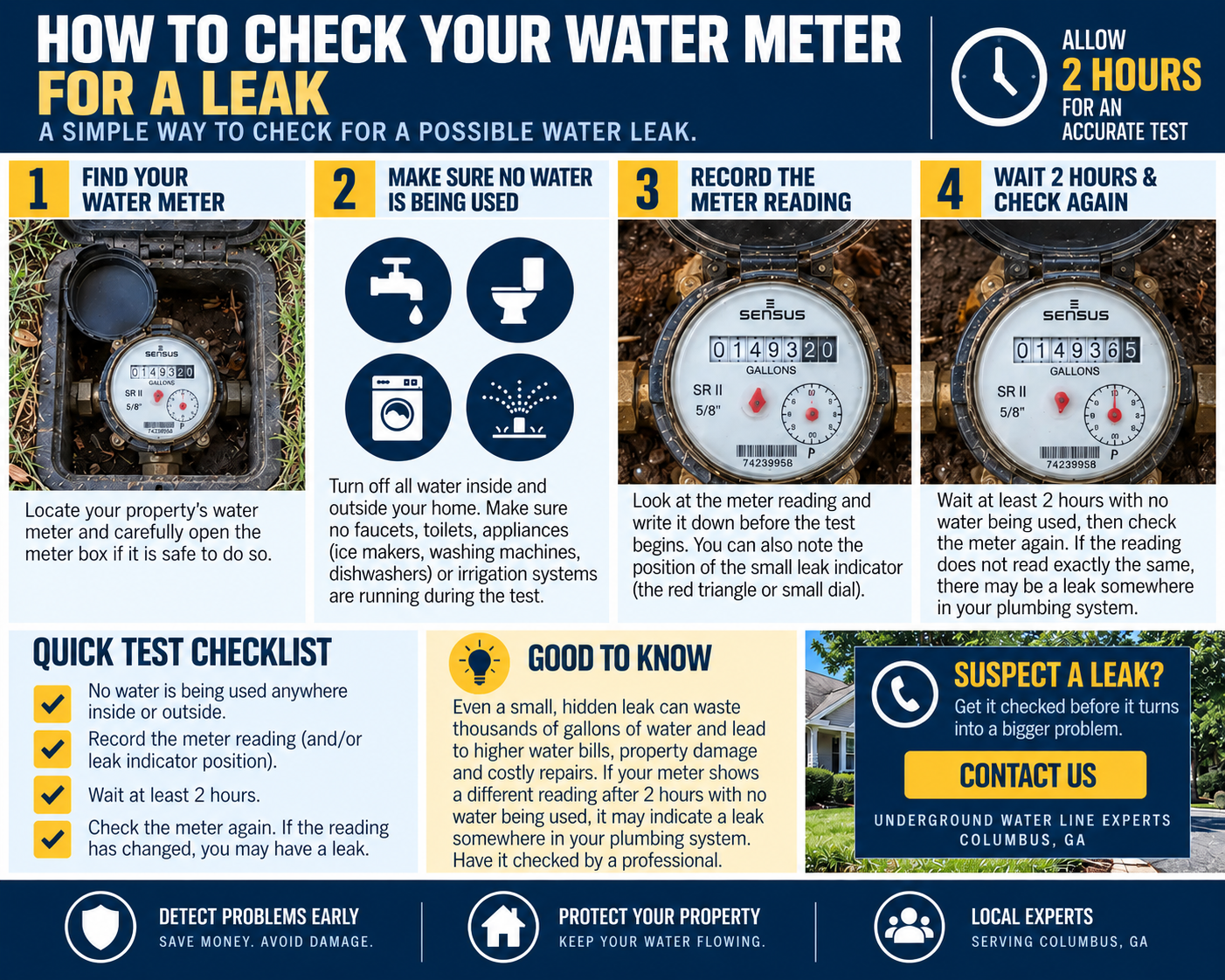
Columbus Water Works (CWW) suggests reading your meter before bed and again the next morning before using any water. If the second reading is higher, you may have a leak, and CWW notes leaks are often underground or under the foundation. After that check, the repair process picks up. Detection is available to homeowners throughout Columbus, including Wynnton.
Meter Test
With no water in use, a meter that still registers flow points to a leak on the property side. It costs nothing and is the natural first step.
Acoustic Listening
Sensitive equipment picks up the sound of escaping water along the line so the leak can be marked before anyone digs.
Line Locating
A private-line locate traces where the buried pipe actually runs. Georgia 811 does not cover the line from the meter to the house, so a private locating service or plumber handles it.
Site Inspection
A walk of the yard for soft ground, pooling, unusually green turf, or sunken areas often narrows the search.
Combining Methods
One method rarely tells the whole story. Cross-checking meter, sound, and site clues gives a more reliable answer.
Water Running Right Now
Visible, active water is a different situation from a slow mystery leak. Shutting off the supply comes first, then the leak gets located.
What Affects the Detection Cost
Detection is usually the smaller part of a leak job, but its scope still varies with the property.
- Number of Methods Needed
- Property Size and Line Length
- Access
- How Clear the Signs Are
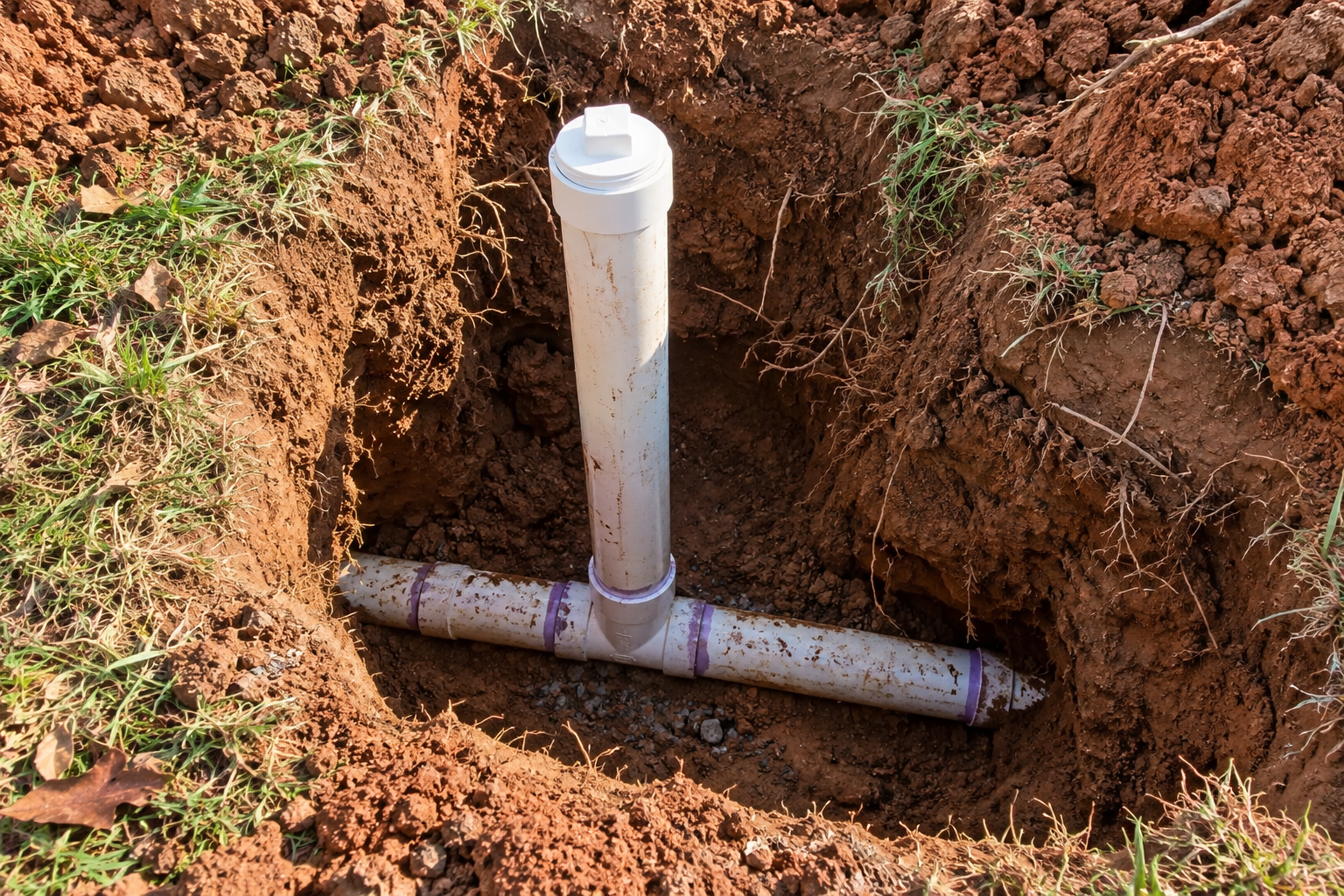
Find Before You Dig
Locate the leak first so excavation is limited to the spot that needs it.
Straight Answers
You get a plain explanation of what the checks show and what comes next.
Easy to Reach Out
Use the contact form or call. No obligation to go further.
Water Lines Only
Focused on the buried water line, not on fixtures or drains.
Related Underground Services
- Underground Water Line RepairWhat a failing buried line looks like, how it's diagnosed, and the repair options.
- Main Water Line RepairSpot repair of the service line when pressure or supply to the whole house drops.
- Trenchless Water Line ReplacementPutting in a new line from small access points rather than one long trench.
- Broken Underground Pipe RepairFirst steps after a sudden break, surfacing water, or a sharp pressure loss.


Helpful Resources
Learn more about underground water lines in Columbus and make informed decisions about your project.
- How to Check Your Water Meter for a LeakTwo ways to test a Columbus water meter for a leak, how to find the meter box and what to do with the result.
- Signs of an Underground Water Line LeakThe yard, bill, pressure, and meter clues that point to a buried water line leak, and how to weigh them together.
- High Water Bill in Columbus? Check for a Leak FirstA meter test, a look at where the leak could be, and how Columbus Water Works handles leak-related bill adjustments.
- Water Leak in the Yard: Is It Your Water Line?How to tell a buried water line leak from irrigation, rain, or drainage, and what to do first once you suspect one.
- Found an Underground Water Leak? What to Do FirstA first-30-minutes checklist for a suspected buried water line leak: shutoff, meter check, photos, who to report it to, and when to call 811.
- Water Line Work in Columbus, GA: 811, Permits & Right-of-WayWhat to do before water line work in Columbus, GA: Georgia 811, plumbing permits, right-of-way encroachment permits and contractor licensing.
- Who's Responsible for the Water Line From Meter to House?How Columbus Water Works divides the public and private service lateral, and what to do when a leak is on your side of the meter.
Underground Leak Detection FAQ
Common questions about finding a buried water leak in Columbus, GA.
Not Sure Where the Leak Is?
Reach out and we will help you work out the right diagnostic approach for your property. No obligation to move forward.
Why Diagnosis Comes Before Digging
Water often travels along the pipe or through the soil before it reaches the surface, so the wet spot in the yard and the actual leak may be some distance apart. Detection combines a few methods to narrow the search before an excavation begins.
Columbus Water Works (CWW) suggests reading your meter before bed and again the next morning before using any water. If the second reading is higher, you may have a leak, and CWW notes leaks are often underground or under the foundation. After that check, the repair process picks up. Detection is available to homeowners throughout Columbus, including Wynnton.
Meter Test
With no water in use, a meter that still registers flow points to a leak on the property side. It costs nothing and is the natural first step.
Acoustic Listening
Sensitive equipment picks up the sound of escaping water along the line so the leak can be marked before anyone digs.
Line Locating
A private-line locate traces where the buried pipe actually runs. Georgia 811 does not cover the line from the meter to the house, so a private locating service or plumber handles it.
Site Inspection
A walk of the yard for soft ground, pooling, unusually green turf, or sunken areas often narrows the search.
Combining Methods
One method rarely tells the whole story. Cross-checking meter, sound, and site clues gives a more reliable answer.
Water Running Right Now
Visible, active water is a different situation from a slow mystery leak. Shutting off the supply comes first, then the leak gets located.
What Affects the Detection Cost
Detection is usually the smaller part of a leak job, but its scope still varies with the property.
- Number of Methods Needed
- Property Size and Line Length
- Access
- How Clear the Signs Are
Find Before You Dig
Locate the leak first so excavation is limited to the spot that needs it.
Straight Answers
You get a plain explanation of what the checks show and what comes next.
Easy to Reach Out
Use the contact form or call. No obligation to go further.
Water Lines Only
Focused on the buried water line, not on fixtures or drains.
Related Underground Services
- Underground Water Line RepairWhat a failing buried line looks like, how it's diagnosed, and the repair options.
- Main Water Line RepairSpot repair of the service line when pressure or supply to the whole house drops.
- Trenchless Water Line ReplacementPutting in a new line from small access points rather than one long trench.
- Broken Underground Pipe RepairFirst steps after a sudden break, surfacing water, or a sharp pressure loss.
Helpful Resources
Learn more about underground water lines in Columbus and make informed decisions about your project.
- How to Check Your Water Meter for a LeakTwo ways to test a Columbus water meter for a leak, how to find the meter box and what to do with the result.
- Signs of an Underground Water Line LeakThe yard, bill, pressure, and meter clues that point to a buried water line leak, and how to weigh them together.
- High Water Bill in Columbus? Check for a Leak FirstA meter test, a look at where the leak could be, and how Columbus Water Works handles leak-related bill adjustments.
- Water Leak in the Yard: Is It Your Water Line?How to tell a buried water line leak from irrigation, rain, or drainage, and what to do first once you suspect one.
- Found an Underground Water Leak? What to Do FirstA first-30-minutes checklist for a suspected buried water line leak: shutoff, meter check, photos, who to report it to, and when to call 811.
- Water Line Work in Columbus, GA: 811, Permits & Right-of-WayWhat to do before water line work in Columbus, GA: Georgia 811, plumbing permits, right-of-way encroachment permits and contractor licensing.
- Who's Responsible for the Water Line From Meter to House?How Columbus Water Works divides the public and private service lateral, and what to do when a leak is on your side of the meter.
Underground Leak Detection FAQ
Common questions about finding a buried water leak in Columbus, GA.
Do I need leak detection if I can already see a wet spot?
Often, yes. Water can travel along the pipe or through the soil, so the wet spot may not sit over the leak. Detection helps put the excavation in the right place.
How accurate is acoustic detection?
It can narrow a leak to a small area on the line, but results depend on pipe material, depth, and background noise. It works best combined with other checks.
Can a leak be located without shutting off my water?
Some checks, like listening along the line, need water in the pipe under pressure. A meter test needs the opposite: no water in use.
What happens once the leak is found?
You can decide between a spot repair, replacing the line, or a trenchless approach, based on the pipe's condition and where the leak sits.
How long does detection take?
It varies with how clear the signs are and how many methods are needed. A visible leak on a short line goes faster than a hidden leak on a long one.
Will I need to dig up my yard to find the leak?
No. The purpose of detection is to find the leak without digging. Excavation begins only after the location is narrowed down.
Not Sure Where the Leak Is?
Reach out and we will help you work out the right diagnostic approach for your property. No obligation to move forward.
Call (770) 676-1685