

Water Leak in the Yard: Is It Your Water Line?
How to tell a buried water line leak from irrigation, rain, or drainage, and what to do first once you suspect one.
A Wet Yard Has More Than One Possible Cause
The water line runs under your property between the meter and the house, so a leak there often shows up as a change in the ground above it. But a soggy patch has several possible explanations, and only some of them mean a leak in the water line.
This guide covers what a yard leak tends to look like, how to rule out the everyday causes, and who to contact once you think water is escaping underground.
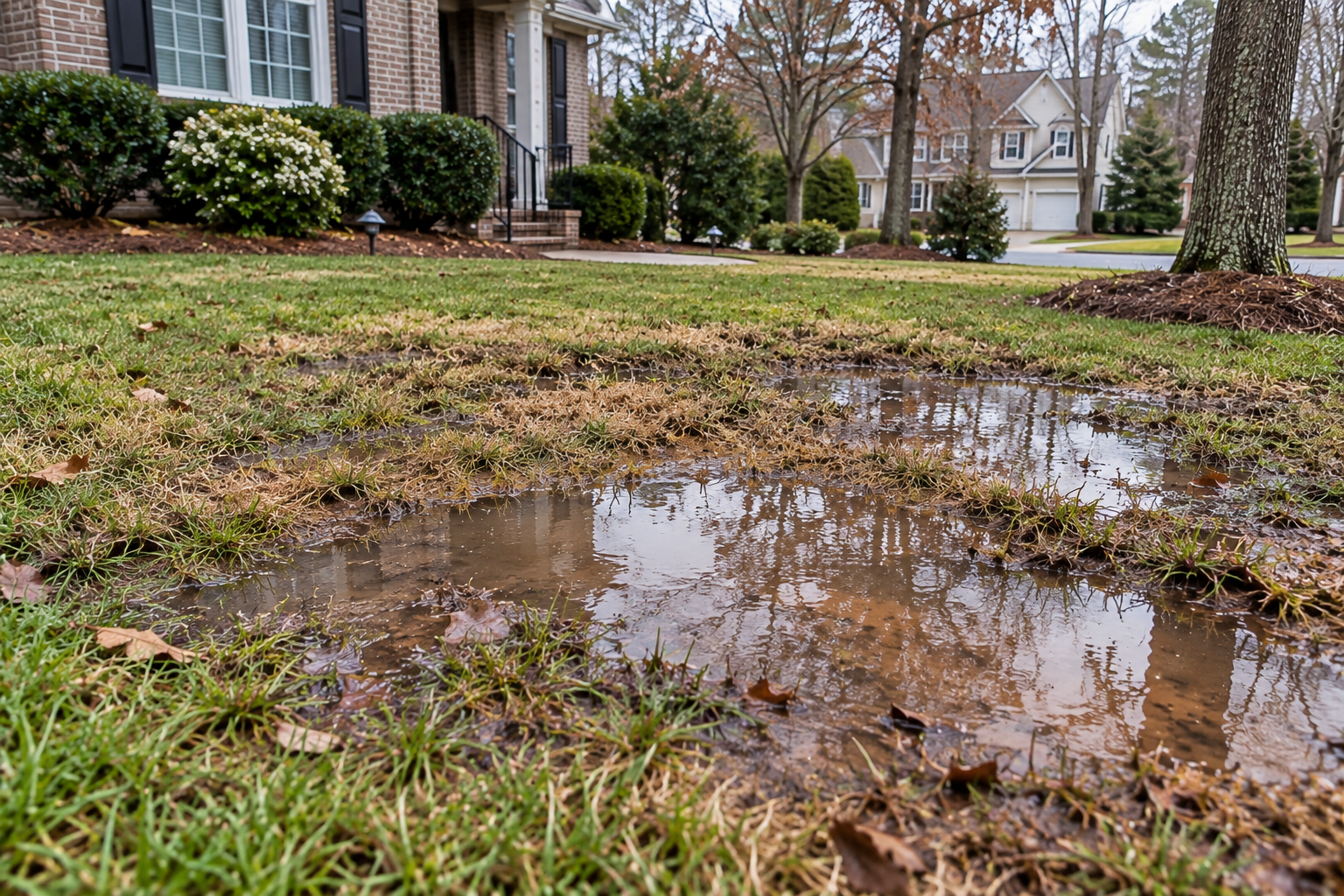
What a Yard Leak Tends to Look Like
Any one of these can have another cause. Several together, especially with a change on the water bill, point more strongly to a buried line.
- Ground that stays wet or soft regardless of the weather
- Grass that is greener or thicker than the lawn around it
- Water bubbling up or pooling on a dry day
- A sunken or washed-out area along the path to the house
Leak, Irrigation, Rain, or Drainage?
Rule out the common causes first. Water that shows up during or just after rain and fades over the following days usually points to drainage. A wet zone that lines up with your sprinkler heads or a cracked irrigation line is another frequent culprit, as is a downspout that dumps in one spot.
If the wet area does not match your sprinklers or the rain, a meter check is the next step. See how to check your water meter for a leak for the steps, and the signs of an underground water line leak guide for the wider list of clues.
How to Narrow It Down
- Turn off irrigation and stop all water use inside and out
- Find the water meter and note the reading or leak indicator
- Check again after a wait. A meter that moves suggests water is escaping
- Photograph the wet area and the meter
- Get the line located and checked before any digging
First Steps If You Think It Is a Leak
Find your home's main shutoff so you can stop the water if the leak gets worse. Take photos of the wet area and the meter for your records, and keep people and vehicles off soft ground.
Do not start digging. Georgia law requires a locate request through Georgia 811 before digging, and marking public lines is free. Note that the 811 locate generally does not cover the private line from the meter to the house, so that part may need a private locating service or a plumber.
Who to Call: Before or After the Meter
Where the leak sits decides who fixes it. According to Columbus Water Works, a leak between the meter box and the street, or in a public area, is theirs to repair, and you can report it through the online Report a Problem form or Customer Service. A leak on the house side of the meter is the owner's to find and repair. The same order of steps applies to homeowners across Columbus.
For a leak on your side, the usual path is underground leak detection to pinpoint it, then underground water line repair once the location is known.

Helpful Resources
Learn more about underground water lines in Columbus and make informed decisions about your project.
- Signs of an Underground Water Line LeakThe yard, bill, pressure, and meter clues that point to a buried water line leak, and how to weigh them together.
- Found an Underground Water Leak? What to Do FirstA first-30-minutes checklist for a suspected buried water line leak: shutoff, meter check, photos, who to report it to, and when to call 811.
- Who's Responsible for the Water Line From Meter to House?How Columbus Water Works divides the public and private service lateral, and what to do when a leak is on your side of the meter.
Water in the Yard: FAQ
Common questions about telling a water line leak from drainage or irrigation.
Water in the Yard: FAQ
Common questions about telling a water line leak from drainage or irrigation.
Could a wet spot just be poor drainage?
Yes, it is one of the most common explanations. Drainage problems tend to follow rainfall, while a line leak often keeps the ground wet whether or not it has rained.
How do I know if it is my sprinklers?
Turn the irrigation off and watch the spot. If it dries out, the sprinklers were the source. If it stays wet and the meter still moves with everything off, look at the water line.
What do I do first if I think there is a leak?
Locate your main shutoff, check the meter, and take photos of the yard and the meter. Keep the area clear and do not dig until lines have been marked.
Who repairs the leak, the city or me?
According to Columbus Water Works, it repairs leaks between the meter box and the street or in public areas. Leaks on the customer side, from the meter to the house, are the owner's to find and repair.
Do I need to call 811 to fix a leak?
Georgia law requires a locate request before digging. The free 811 marking covers public lines, and the private line from the meter to the house generally needs a private locate or a plumber.
Will fixing a yard leak mean digging up the whole lawn?
Not necessarily. Once the leak is located, a spot repair or a trenchless approach can often limit how much ground is opened, depending on the line and its path.
Not Sure What Is Causing the Wet Spot?
Reach out and tell us what you are seeing. We will help you work out whether it is your water line, with no obligation to move forward.
Not Sure What Is Causing the Wet Spot?
Reach out and tell us what you are seeing. We will help you work out whether it is your water line, with no obligation to move forward.
Call (770) 676-1685